Having white teeth and a beautiful smile is one of the most important factors in boosting self-confidence. Every day, the number of people seeking a method to achieve white and attractive teeth increases. For this reason, many individuals look for ways to whiten their teeth. Today, numerous methods are available for tooth whitening, but overall, dental bleaching is considered one of the most effective techniques.
When undergoing bleaching, two points should be noted: first, the bleaching process is not permanent, and if proper oral care is not maintained, tooth color may change. Second, the final outcome and degree of whiteness cannot be fully predicted.
Continue reading to learn more about dental bleaching.
What is Dental Bleaching?
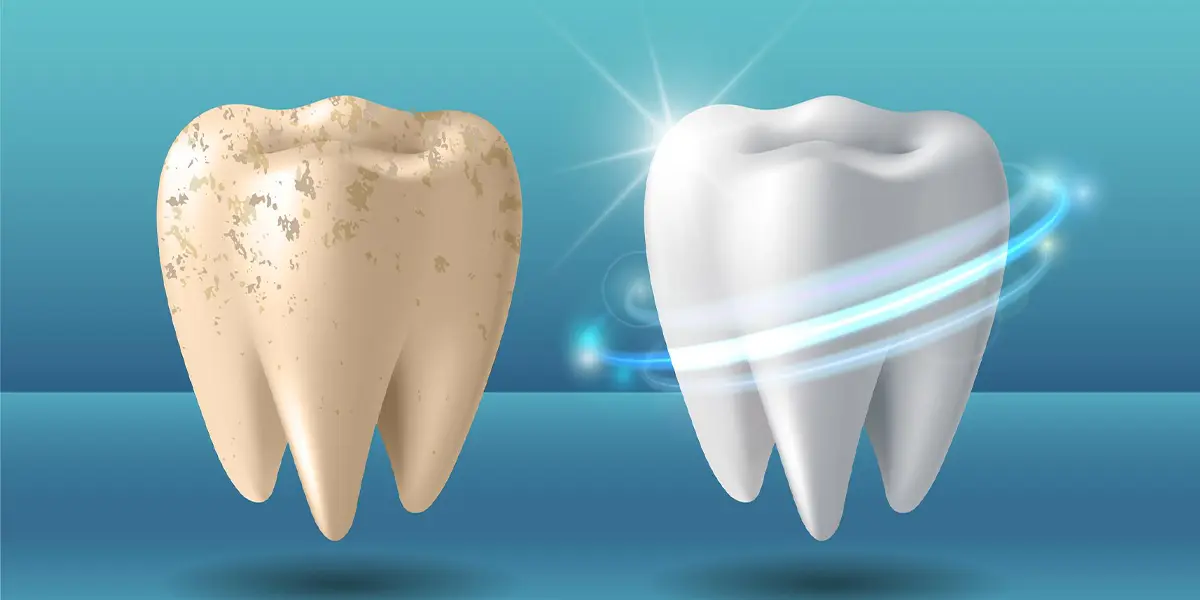
Bleaching is a non-invasive procedure that typically uses a controlled concentration of hydrogen peroxide as the whitening agent. This agent oxidizes the pigments on the teeth, resulting in a whiter appearance.
Through bleaching, all stains and discolorations on the teeth can be removed, and notably, this method does not require any tooth preparation or reduction.
Types of Bleaching Methods:
In-office Bleaching:
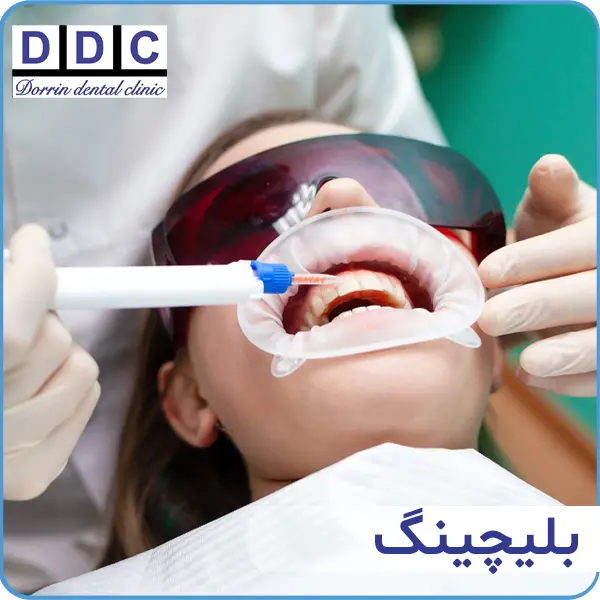
In this method, a high-concentration bleaching agent is applied to the teeth over one or two sessions and activated with a light-curing device. To protect the gums from exposure to the bleaching agent, a gum barrier is applied before the procedure.
At-home Bleaching:
In this approach, a dental impression is taken, and a custom clear tray is fabricated for the patient. A lower-concentration bleaching gel is provided, and a small amount is placed in the tray during use. Depending on the gel concentration, it is typically worn for 4 to 6 hours per day over one to two weeks.
Advantages of Dental Bleaching:
-
Cost-effective and affordable
-
Rapid whitening and brightening of teeth
-
Increased self-confidence
-
Safe and comfortable procedure
-
Pain-free whitening
-
Enhances smile aesthetics
-
Supports oral health and hygiene
-
Removes long-standing stains
-
Easy maintenance and care
Who is Suitable for Dental Bleaching?
-
Individuals with yellowed teeth who wish to whiten them
-
People whose teeth have proper form and size and desire a radiant smile
-
Those seeking improved aesthetics and increased self-confidence
-
Individuals whose anterior teeth have minimal or no restorations
Longevity of Dental Bleaching:
The durability of bleaching depends on factors such as tooth composition, oral care, and maintenance. Bleaching is not permanent and usually needs to be repeated approximately every two years.
Maintaining tooth whiteness relies on adherence to post-treatment recommendations. Excessive consumption of colored beverages such as tea and coffee, smoking, high soda intake, and poor oral hygiene can all reduce the longevity of bleaching results.
Appropriate Age for Dental Bleaching:
Since enamel and dentin are not fully matured before the age of 18, they are more sensitive. Therefore, the ideal age for bleaching is after 18 years.
Who Should Not Undergo Bleaching?
-
Patients with dental implants
-
Individuals with incomplete enamel development
-
Pregnant and breastfeeding women
-
Patients with active gum disease
-
Individuals with specific allergies or sensitivities
Bleaching During Pregnancy:
No specific adverse effects have been identified for bleaching during pregnancy; however, due to the use of chemical agents, it is recommended to postpone bleaching until after pregnancy.
Post-Bleaching Care:
-
Teeth are more susceptible to staining after bleaching. Avoid tea, coffee, carbonated drinks, colored juices, dark sauces (such as soy sauce), and pigmented foods (e.g., saffron).
-
Smoking and tobacco use can discolor teeth; avoid them for at least 48 hours after bleaching.
-
Brush teeth twice daily with appropriate toothpaste and a soft-bristled brush; flossing is recommended to clean interdental spaces.
-
Adequate water intake helps rinse teeth and prevents pigment accumulation.
-
Limit acidic foods and beverages (e.g., citrus fruits and carbonated drinks) as they may weaken enamel.
-
Use a straw for colored beverages to minimize contact with teeth, reducing staining.
-
Regular check-ups are essential to maintain bleaching results and overall dental health; your dentist can provide additional care recommendations.
-
Mild tooth sensitivity may occur for a few days after in-office bleaching or during home bleaching with gels. Use fluoride-containing gels or desensitizing toothpaste to alleviate sensitivity.